AI and the Data Center Talent Gap
Insights
26 January 2026
Kaleigh Habeck
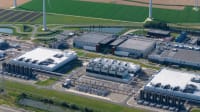
The rapid growth of AI is no secret; companies worldwide are adopting AI into their daily operations and across their teams to stay ahead of the competition. Industries such as oil and gas, power, nuclear, and mining use AI to enhance efficiency, reliability, safety, automation, and sustainability in their projects. With large companies and the average consumer’s use of AI comes a surging reliance on data centers to support AI workloads. The unprecedented computational power of things like large language models (LLMs) and generative AI makes specialized data center infrastructure indispensable. The rapid growth of data centers introduces the concept of a widening data center talent gap, which is a growing mismatch between the massive demand for skilled workers to build and run data centers and the limited supply of qualified professionals.
How AI is Reshaping Data Center Infrastructure
Because of the massive uptick in AI, machine learning, and high-performance computing workloads, a shift towards higher computing density and GPU-heavy data centers is underway. This shift creates the need for higher power, cooling, and redundancy requirements to support critical systems that demand near-zero downtime and fault tolerance. A fundamental transformation of data center design introduces the shift from traditional IT environments to AI-driven infrastructure, where high-density AI centers are built around accelerated computing and driven by the immense computational power and low-latency needs of AI workloads.
Why AI is Accelerating the Data Center Talent Shortage
As new developments and innovations emerge from AI advances, a workforce development gap begins to widen. These developments and innovations create an urgent need for upskilling as many companies shift to integrating AI into their daily operations. Last year, data centers were estimated to require roughly 325,000 new full-time data center professionals worldwide to keep up with demand and advancements, with the most notable shortages in technical roles such as Large Language Model (LLM) development, Machine Learning Operations (MLOps), and AI ethics. This number is projected to grow rapidly worldwide.
With the rapid growth of AI and the need for data centers, there’s also a surprisingly notable gap in non-technical skills like problem-solving, critical thinking, and adaptability to avoid major operational disruptions. With these skills central to many other industries with projects dependent on high performance, a domino effect is evident as professionals proficient in these skills transfer to data center operations for benefits such as higher salaries or a more flexible working environment.
Critical Roles Affected by AI and the Data Center Talent Gap
Talent gaps in new and specialized roles like AI/ML Engineers, Automation Leads, and Digital Twin Techs make traditional roles like data entry and routine checks vulnerable, further reinforcing the need for major upskilling in AI and cyber, business acumen, and ethics to support AI infrastructure. This shortage also affects construction trades like electricians, builders, and IT professionals. Notable urgent gaps are felt in Electrical & Power Systems Engineers, Mechanical and Cooling Specialists, Data Center Operations & Facilities Managers, Network, Systems, & Infrastructure Engineers, and Commissioning & Reliability professionals.
Electrical & Power Systems Engineers
The impact of a shortage of Electrical & Power Systems Engineers is felt across grid stability to AI deployment speed and often requires new or refreshed skills in renewables, microgrids, and AI-integrated hardware. A shortage of engineers is slowing data center expansion and grid upgrades needed for AI clusters, making power a bigger constraint than computing. AI’s rise creates jobs like Fuel Cell Specialists, Energy Transition Consultants, and roles in retrofitting for efficiency.
Mechanical & Cooling Specialists
Data centers are known to be high-density, power-hungry, and thermally demanding environments, leaving an acute talent gap for mechanical and cooling specialists. These centers require liquid-cooled servers and high-density GPU racks, making roles in thermodynamics and heat management critical to avoid infrastructure failures. This causes an aggressive hiring cycle, as hundreds of data centers are expected to be built over the next few years, putting a massive strain on the pipeline of skilled mechanical and cooling talent – often requiring professionals to adapt to such a significant shift.
Data Center Operations & Facilities Managers
The increased complexity and demand in the data center talent gap critically affect Data Center Operations & Facility Managers, shifting their focus from routine tasks to AI-driven optimization, predictive maintenance, and the management of complex infrastructure for power, cooling, and capacity, amid a broader industry struggle. Managers oversee more complex AI-driven systems, demanding expertise in high-density power and cooling, advanced networking, and critical cybersecurity, underscoring high turnover and intense competition for specialized skills.
Network, Systems, & Infrastructure Engineers
Acute shortages in core roles like electricians, control techs, and those managing complex AI hardware force a shift from manual skills to critical thinking and continuous learning for roles like Network, Systems, & Infrastructure Engineers. Network Engineers manage increasingly complex, software-defined networks that support high-bandwidth AI workloads, requiring expertise in AI-driven orchestration. Systems Engineers face pressure to integrate AI and ML platforms with physical hardware, migrating from managing servers to optimizing AI environments. Critical shortages of Infrastructure Engineers have become more prevalent as the need to build and maintain massive AI facilities must be balanced with new demands for energy efficiency. These changes create new, in-demand roles like AI Infrastructure Operations Engineers, Data Center Automation Leads, and AI Security Specialists.
Commissioning & Reliability Professionals
Key roles in commissioning and reliability are shifting to require advanced skills in automation, high-density power, liquid cooling, and predictive maintenance, meaning roles like traditional hardware generalists and techs are evolving into controls engineering, commissioning teams capable of testing AI-integrated systems, and electrical and mechanical engineers that understand power and specialize in advanced cooling for high-density AI hardware and workloads.
New Skills Required in Data Center Roles
AI automation shifts traditional manual tasks to strategic oversight, which often requires new, hybrid skills in AIOps, automation, cloud & AI infrastructure, data science, AI security (AI TRiSM), and specialized networking, along with non-technical skills in problem-solving, adaptability, and cross-functional communication. Data center professionals are expected to have stronger analytical and collaborative skills to manage these complex, AI-driven environments.
AI workloads run primarily on GPUs (Graphics Processing Units) and specialized hardware rather than traditional CPUs, necessitating a shift in expertise toward GPU ecosystems, HPC architecture, and virtualization & containerization. AI servers also consume more power and generate higher heat densities than traditional equipment, requiring expertise in liquid-cooling technologies such as immersion cooling, thermal modeling, and fluid dynamics. Because of the significantly higher power densities in data centers, companies are also seeking professionals in high-density power management, sustainability and energy governance, and renewable energy integration. Manual, routine data center operations tasks are being replaced by AI-driven automation, creating a need for skills in AIOps and predictive maintenance, Infrastructure as Code (IaC), and digital twin technology. Companies are moving away from siloed teams toward unified groups that understand both IT workload requirements and physical infrastructure limitations, requiring professionals to understand how changes in software and workloads affect physical cooling and power, and vice versa.
Challenges Employers Face When Hiring for Data Centers
It’s well known that as AI advances, data centers are facing critical talent shortages and a growing demand for specialized staff. Specific challenges, such as narrow candidate pools with relevant experience, long hiring timelines, rising salary expectations, and knowledge-transfer risks, are at the core of these challenges.
Narrow candidate pools with relevant experience expose a need for mid-level technicians and the intense competition between contractors, operators, and hyperscalers who aggressively source the same limited pool of skilled talent. Because of this talent gap and unfilled positions, project timelines are stretched beyond expectations, causing backlogs; these delays are high-stakes for companies, with every day a project is delayed costing hundreds of thousands of dollars. Companies are also experiencing rising salary expectations and retention concerns due to the scarcity of skilled workers and the need for better benefits, greater flexibility, and investment in learning and development. There’s also the risk of knowledge transfer loss as a significant portion of experienced staff approaches retirement, taking critical knowledge on legacy systems and possibly undocumented operating procedures.
Implications for Data Center Operators and Developers
The unprecedented demand for specialized talent has significant implications for data center operators and developers, as the industry faces a skills gap that is transforming project management, workforce strategies, and operational models. Project delays and operational risks include delayed timelines, operational downtime, quality and safety issues, and increased costs. The talent scarcity delays design, permitting, construction, and commissioning, while also increasing the risk of critical incidents that could result in substantial financial penalties and reputational damage. Understaffed teams also experience quality and safety issues, leading to critical human errors or lower-quality work. Increased reliance on contractors and global talent is driving demand for project managers, MEP leaders, and commissioning specialists, prompting an international search for talent to navigate regional regulations and technical standards. With experienced professionals retiring, operators and developers are faced with adopting proactive, data-driven workforce planning to map out critical roles and ensure continuity. These implications also encourage partnerships with recruitment agencies with niche expertise in targeted hiring for specific needs of mission-critical facilities, and companies will turn to agencies with access to pre-qualified, specialized, or vetted talent pools to speed up their hiring processes.
How Recruitment Agencies Can Help Bridge the Gap
A strategic recruitment approach bridges the critical AI talent gap by shifting from passive, requirement-heavy hiring to active, skills-based, and flexible methodologies. By targeting niche skill sets, leveraging technology, and adopting flexible work models, organizations can secure scarce AI expertise.
Expert recruitment agencies identify “passive” candidates (those not actively searching but open to opportunities) who comprise about 70% of the current workforce. These agencies use niche platforms or their rich internal candidate databases to find pre-vetted data center professionals with specific expertise in machine learning, NLP, computer vision, and more. These expert recruitment agencies also understand AI-specific infrastructure skill requirements. They are often composed of recruitment staff who understand technical competencies and evaluate candidates based on verified skills, thereby significantly expanding the talent pipeline. Recruitment agencies with strong global mobility can attract international candidates to companies open to expatriate talent for their projects. Given the nature of data centers, working with an expert recruitment agency that supports flexible hiring models can drive even greater success. Using contract staffing to fill immediate, specific skill gaps without the long-term commitment of a permanent hire is ideal for rapidly changing data center and AI projects. This model of project-based hiring also allows companies to bring in specialists for specific, short-term, or high-volume tasks.
Preparing for the Future of AI and Data Center Talent
Data center companies are preparing for the future of AI and data center talent through a multi-faceted approach that incorporates upskilling, early engagement, long-term workforce pipelines, and an aligned talent strategy. Companies are heavily investing in training their current workforce through formal courses and certification programs to become AI-capable. Efforts are also underway to promote the data center industry as a viable career path and to create clear, accessible training pathways, thereby fostering robust, collaborative ecosystems involving governments, industry leaders, and academia. Organizations are moving from relying solely on internal talent to using recruitment agencies to support workforce planning and talent strategy in anticipation of closing skill gaps.
Conclusion
Artificial Intelligence is having a transformative impact on data center workforce demand, creating a paradox in which AI simultaneously automates routine tasks while driving unprecedented, intense demand for specialized human labor. The rapid global adoption of AI is fueling a massive investment in physical infrastructure, driving the need for more construction, power, and operations personnel while also widening the gap for skilled talent. The urgency of addressing this talent gap is critical, driven by explosive demand for AI and cloud computing that has outpaced the available workforce. The industry faces a “perfect storm” in which rapid expansion, an aging workforce, and a surge in global data center supply collide with a shortage of skilled personnel. Expert recruitment agencies are a critical success factor for data centers because they bridge the gap between the industry’s unprecedented, rapid growth and a severe shortage of specialized, technical talent. With data centers’ projected growth, hiring challenges require specialized, proactive hiring strategies, where recruitment agencies provide critical support in accessing niche and passive talent, improving hiring speed and efficiency, and mitigating operational and compliance risks.
With all the challenges data centers face, Global Edge is an expert recruitment agency with the skills companies need to overcome them. Our specialized recruitment teams have a deep understanding of the complexities behind hiring for critical environments and ensure successful hiring for companies seeking niche suppliers. For more on our experience and knowledge on recruitment for data center projects, visit our Expertise page.
You might find
these interesting...