Technology in Mining: How Automation Is Reshaping the Workforce
Industry, Insights
13 November 2026
Stephanie Taylor
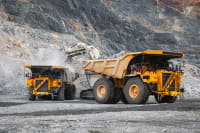
Technology is changing how mining operations function, but its impact extends well beyond equipment and production processes. As mining companies introduce autonomous systems, remote operations, advanced analytics, and electrified equipment, the skills required to operate and maintain modern mines are evolving.
These developments offer opportunities to improve worker safety, equipment reliability, and operational productivity. However, they also introduce new workforce challenges. Employers increasingly need professionals who can combine traditional mining knowledge with expertise in automation, digital systems, data analysis, and advanced equipment maintenance.
For mining companies, the challenge is not simply adopting new technology. It is ensuring the workforce has the technical capabilities to support it.
As technology in mining continues to advance, HR leaders and operations managers must consider which roles are changing, where specialized talent is becoming more difficult to source, and how existing employees can transition into technology-enabled operations.
Mining automation is changing traditional operational roles
Autonomous haulage systems and automated drilling equipment are changing how mining companies manage equipment, production, and personnel. These technologies can reduce the need for workers to operate certain machines directly while creating greater demand for professionals who monitor, maintain, and troubleshoot automated systems.
Traditional equipment operators are increasingly working alongside remote operators, automation technicians, and control systems specialists. Rather than controlling individual machines throughout an entire shift, some employees may oversee multiple pieces of equipment, respond to system alerts, or coordinate activities across automated fleets.
Research from the Mining Industry Human Resources Council (MiHR) examines how emerging technologies are affecting critical mining occupations in Canada, highlighting the changing skills and responsibilities associated with increasingly automated operations.
For employers, these developments reinforce the need to evaluate both traditional mining experience and the technical capabilities required to support automated equipment and remote operations.
These changes introduce new technical requirements. Employers need personnel who understand equipment performance, industrial control systems, sensors, and the software used to manage automated operations.
Experienced mining professionals remain essential because they understand site conditions, production requirements, and the operational risks associated with heavy equipment. However, that experience must increasingly be combined with digital and technical capabilities.
Data analytics and predictive maintenance are creating new technical roles
Mining companies are increasingly using data analytics and artificial intelligence to support production planning, equipment monitoring, and operational decision-making.
These technologies are creating opportunities for data analysts, software specialists, and professionals experienced in industrial analytics. However, general digital expertise does not always translate directly into mining applications.
A data analyst may understand statistical modeling but lack experience with mining equipment or production constraints. Similarly, an experienced mining professional may understand operational processes but need additional training to work with advanced analytical systems.
Predictive maintenance presents a similar challenge. By using equipment data to identify potential failures before they occur, mining companies can improve reliability and reduce unplanned downtime.
This increases the importance of reliability engineers, instrumentation technicians, and maintenance professionals who can interpret equipment data and apply it to practical maintenance decisions.
The U.S. Bureau of Labor Statistics projects employment of industrial machinery mechanics to grow approximately 18% between 2025 and 2035. While these projections cover multiple industries, they reflect broader demand for professionals capable of maintaining increasingly automated industrial equipment.
For mining employers, the challenge is identifying maintenance professionals who can combine mechanical expertise with electronic diagnostics, equipment monitoring, and advanced troubleshooting capabilities.
Electrification is increasing demand for specialized electrical skills
As mining companies adopt electric equipment, battery-powered vehicles, and supporting infrastructure, workforce requirements are expanding into new technical areas.
Electrification introduces demand for electrical engineers, high-voltage technicians, battery systems specialists, and professionals experienced in power distribution and electrical safety.
These skills are also sought after in utilities, renewable energy, manufacturing, and transportation, creating competition for specialized technical talent.
For mining employers, finding candidates with both electrical expertise and experience in demanding industrial environments can be particularly challenging.
Existing maintenance teams may also require additional training to safely operate and service new equipment, making workforce development an important part of electrification planning.
The mining technology skills gap is becoming more complex
The growing use of connected and automated systems is creating a mismatch between traditional mining experience and the technical capabilities required in modern operations.
Automation and controls engineers, data analysts, and professionals who understand both operational technology (OT) and information technology (IT) are increasingly relevant to the mining workforce.
These positions require knowledge of industrial systems, automation software, digital networks, and equipment reliability. Finding professionals with this combination of skills can be difficult, particularly as other industries compete for similar expertise.
Regional conditions can further complicate recruitment. In Canada, remote mining locations can make attracting specialized technical personnel challenging, while the adoption of remote operations changes where certain positions can be based. In South Africa and the United States, employers must also balance technology adoption with workforce development and competition for technical skills.
The challenge is not simply whether qualified professionals exist. It is whether they have the right combination of technical experience, mining knowledge, and availability to support specific operations.
Reskilling the existing mining workforce
Technology adoption does not necessarily mean traditional mining roles will disappear. In many cases, responsibilities will change as equipment and operational processes become more advanced.
Experienced equipment operators may transition into remote monitoring or automated fleet supervision, while maintenance technicians may develop additional capabilities in electronic diagnostics and condition monitoring.
These transitions can help employers retain valuable operational knowledge while developing the skills required for technology-enabled operations.
The World Economic Forum’s Future of Jobs Report 2025 identifies workforce upskilling as a major priority for employers responding to technological change. For mining companies, this reinforces the importance of developing existing employees alongside recruiting professionals with specialized digital and technical expertise.
However, reskilling requires structured training, practical experience, and clear career development pathways. Employers must identify which capabilities can be developed internally and which require external recruitment.
What should mining employers do now?
Addressing the mining technology skills gap requires workforce planning that begins before new systems are introduced.
- Identify future workforce requirements early. Assess the technical roles and skills needed to support new equipment and systems during project planning rather than waiting until positions become urgent.
- Recruit for transferable technical capabilities. Consider professionals from energy, utilities, manufacturing, and industrial automation who may bring relevant experience in controls, electrical systems, and data analytics.
- Invest in existing employees. Develop training programs that help experienced operators and maintenance personnel transition into changing roles while preserving valuable operational knowledge.
- Build long-term talent pipelines. Establish recruitment and training strategies that account for increasing competition for specialized technical professionals.
Preparing the mining workforce for technological change
Technology in mining offers opportunities to improve safety, productivity, and operational efficiency. However, realizing these benefits depends on having professionals who can operate, maintain, and support increasingly advanced systems.
For employers, the challenge is finding and developing the right combination of technical capabilities and operational experience as workforce requirements evolve.
Global Edge Group supports mining and other technical industries through specialized recruitment and workforce solutions, helping organizations identify qualified professionals and respond to changing operational requirements.
To discuss your mining workforce needs, contact our team.